Ferries & water taxis
Electric ferries and water taxis
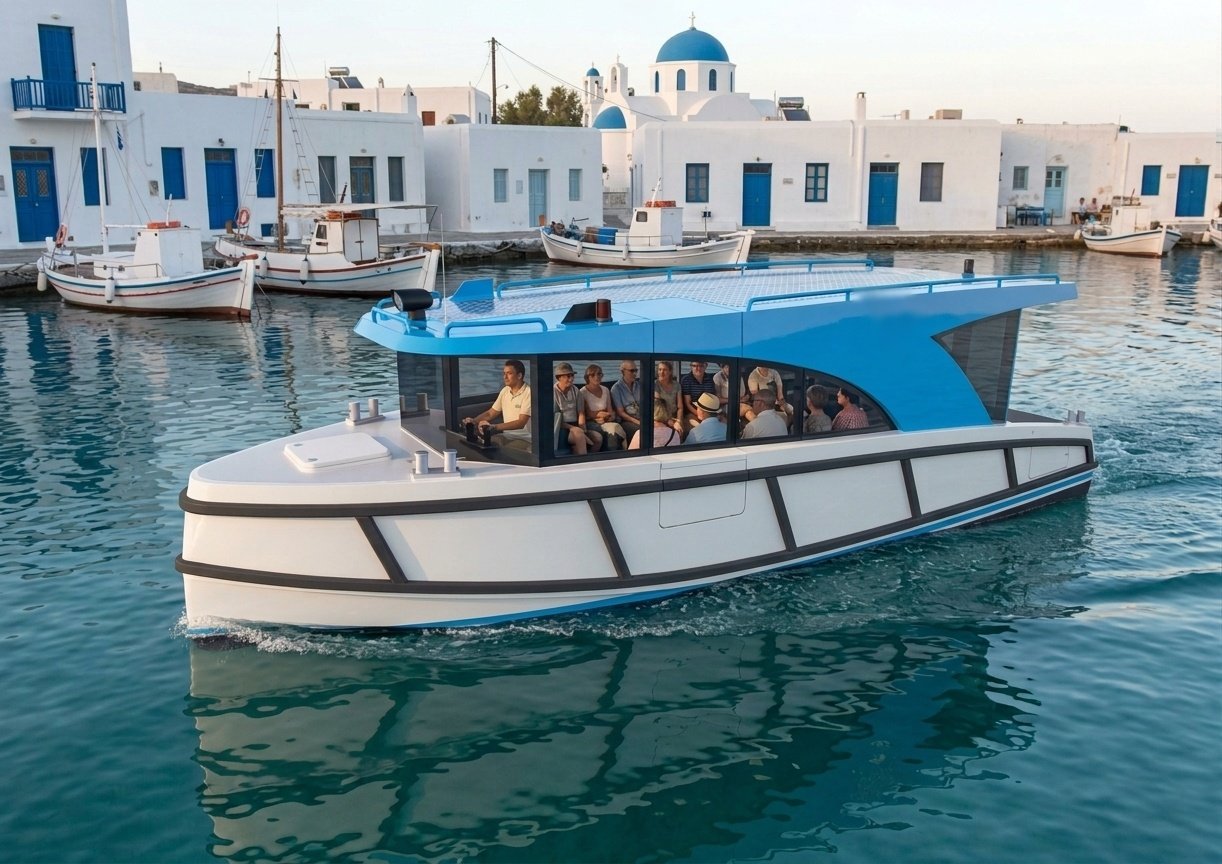
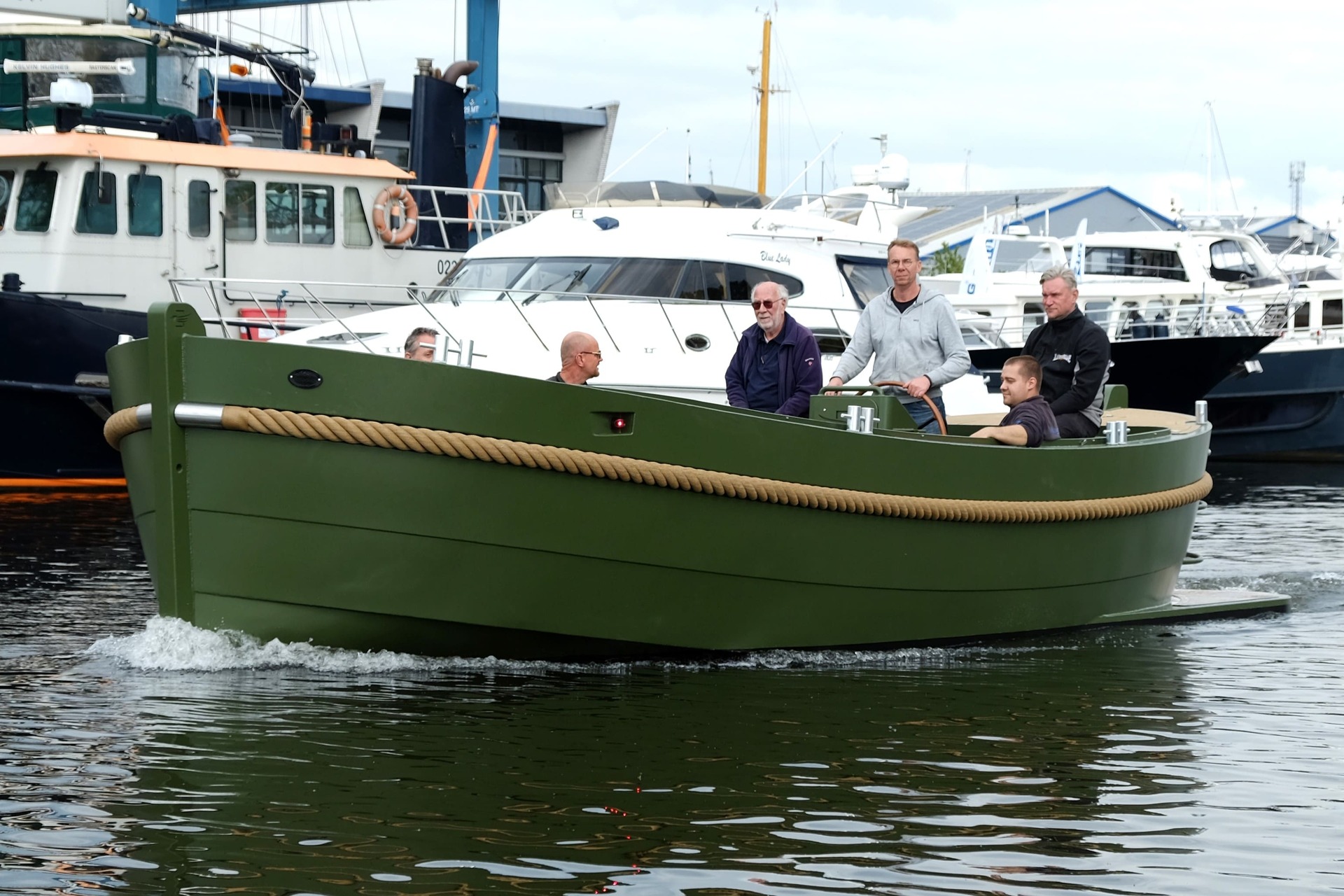
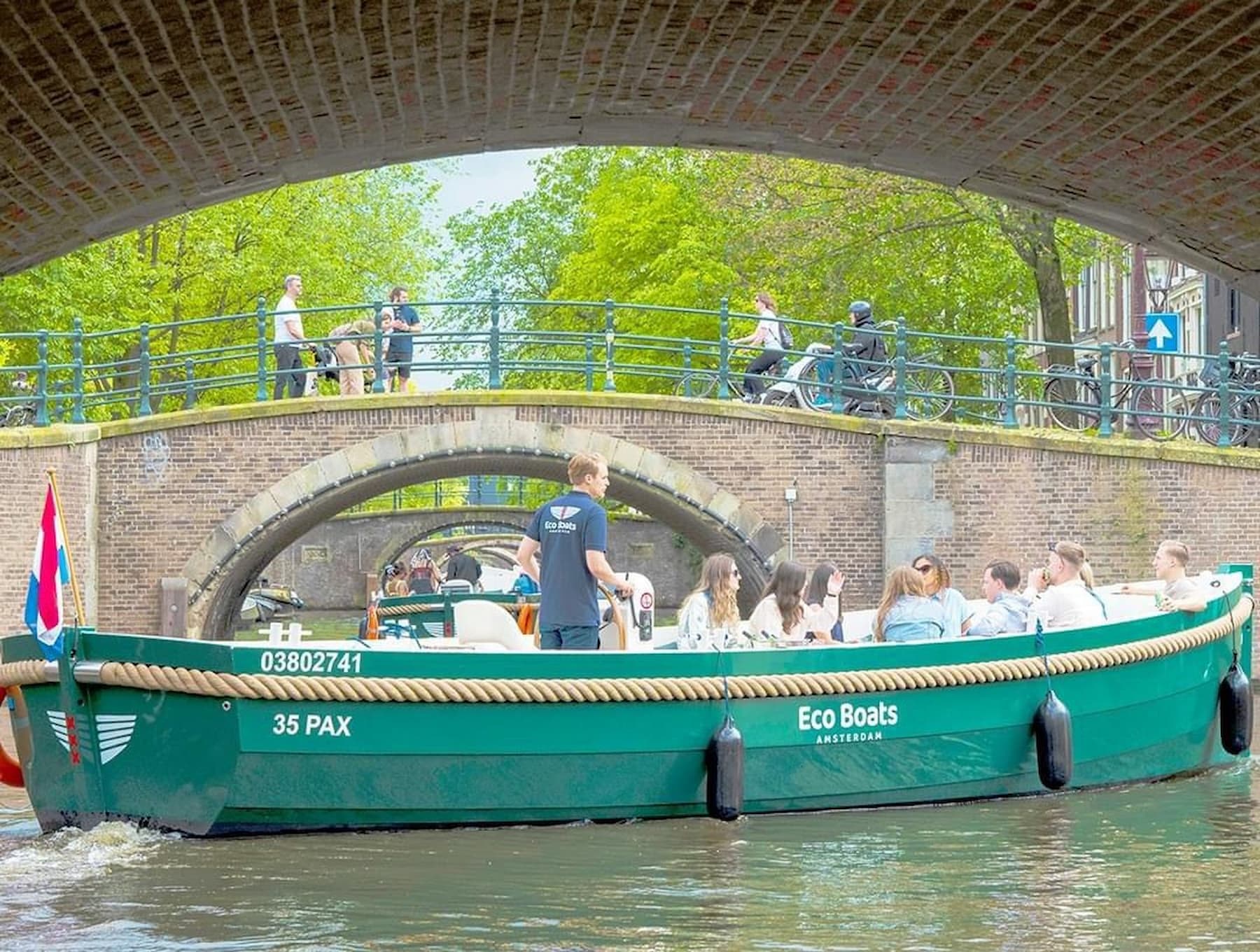
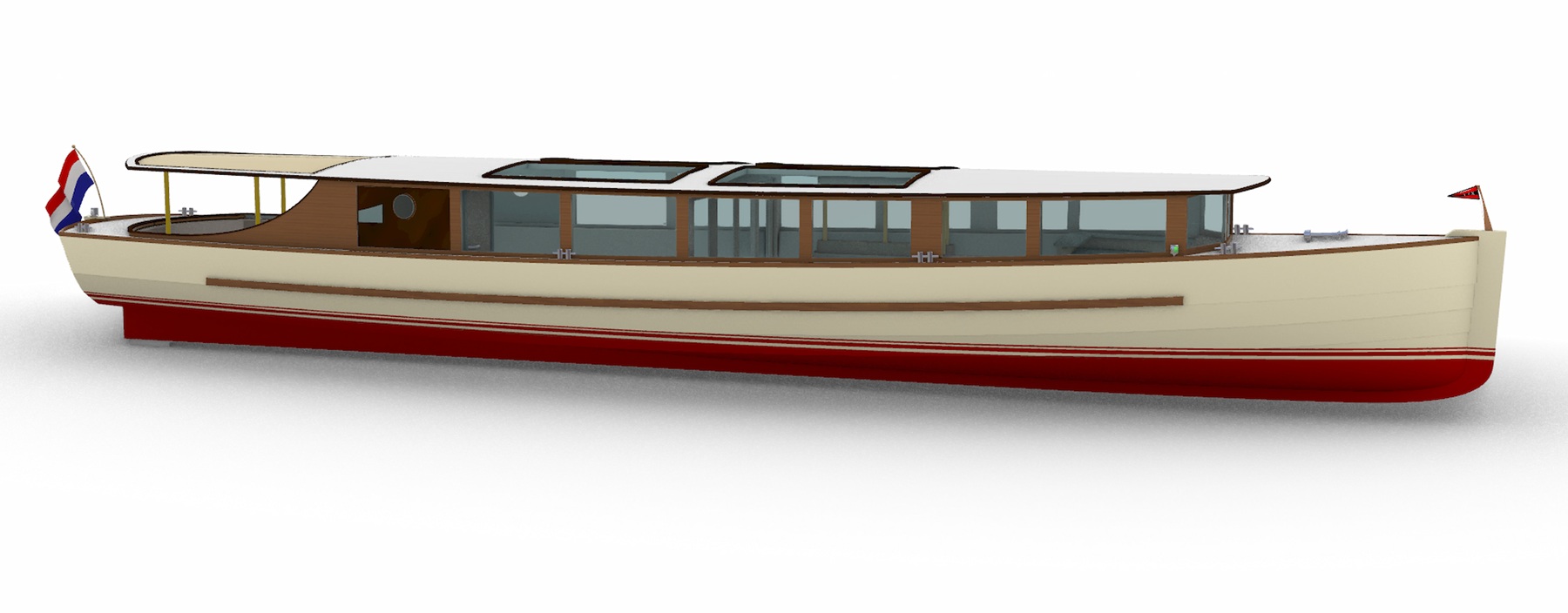
For short crossings, harbours and islands: electric aluminium boats of 9 and 10.5 metres for 12 to 20 passengers, wheelchair accessible too.
Accessible to everyone
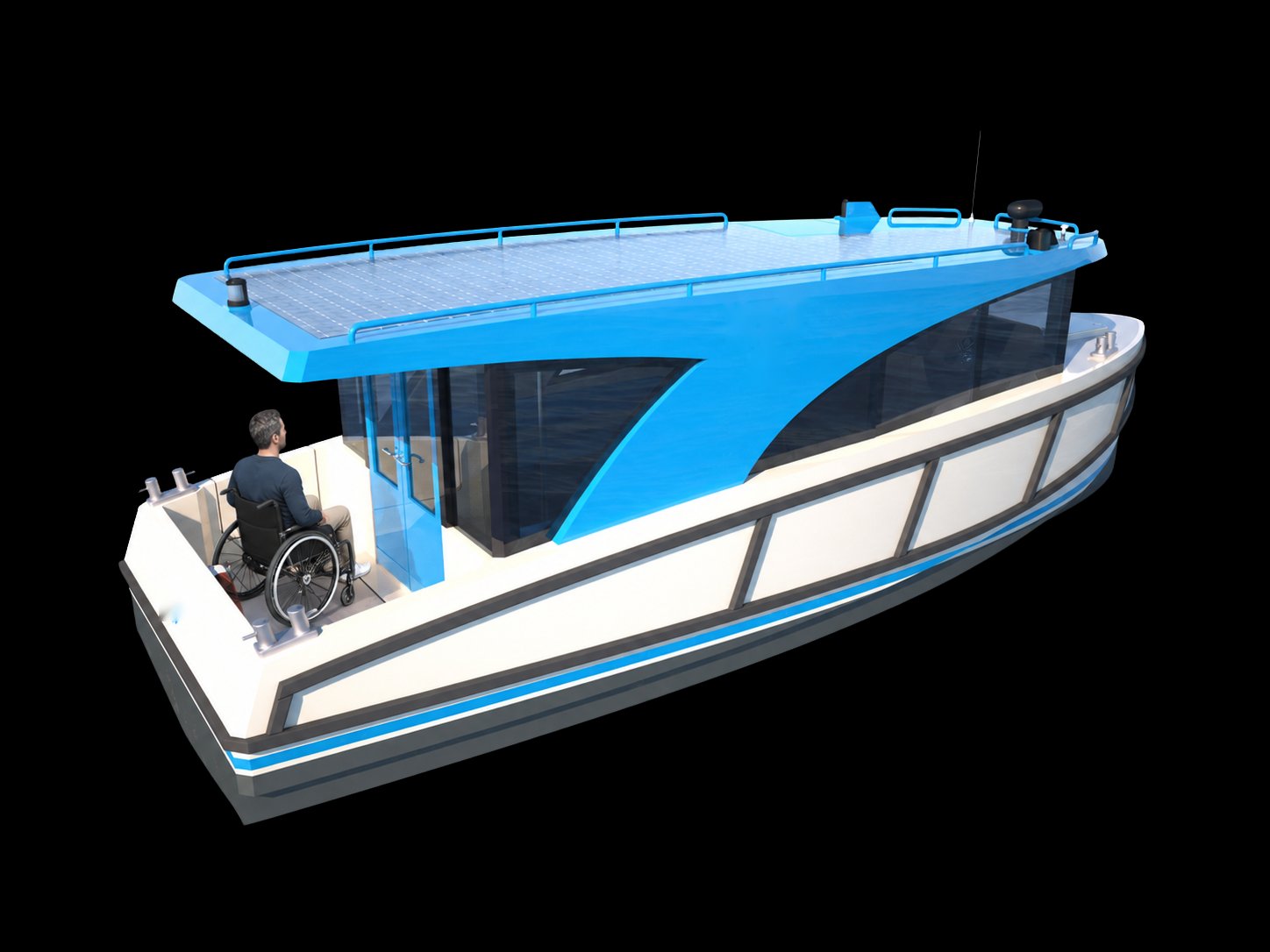
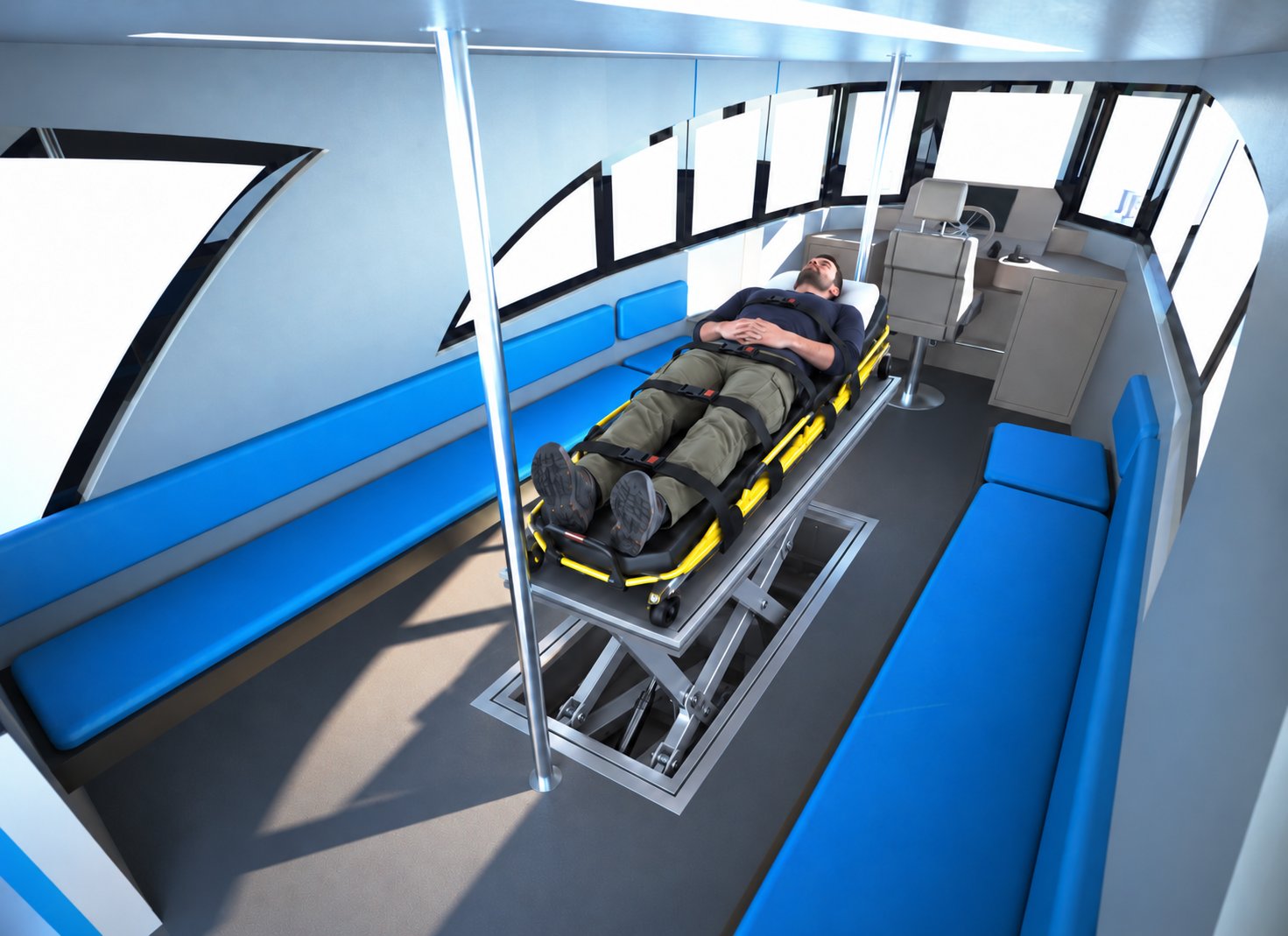
A hydraulic lift lets wheelchair users board independently.
Charge between crossings
Short charging stops at the quay keep the battery small and the service running.
Silent at the quay
No exhaust fumes for waiting passengers and residents.
Solar and backup
Solar panels on the roof and a backup generator.
In development
Wheelchair-accessible ferries for 12 and 20 passengers
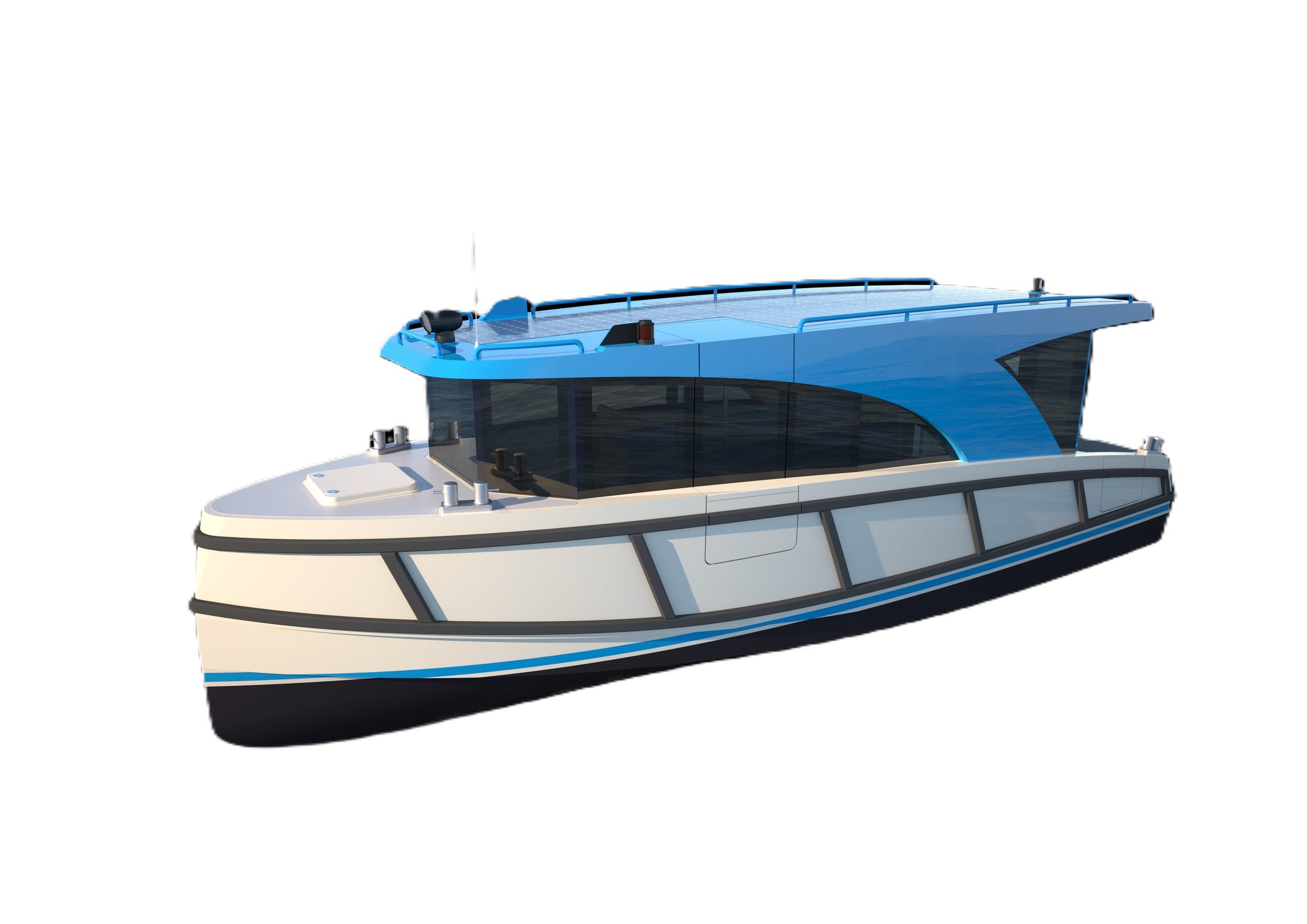
For Greek island crossings we are developing electric passenger boats in two versions: 9 metres and 10.5 metres, for 12 and 20 passengers. Both get a hydraulic lift, so wheelchair users board and leave without help.
The cabin has room for a stretcher on a lifting platform, so the boat can also carry patients to and from the island. Solar panels on the roof supply part of the energy and a generator serves as backup. The lithium battery is 600 to 1200 Ah at 51.2 V (31 to 61 kWh), matched to the timetable.
The boats are made for short, frequent crossings. We calculate the timetable and decide together where and how long to charge between crossings.
Featured
Technical data
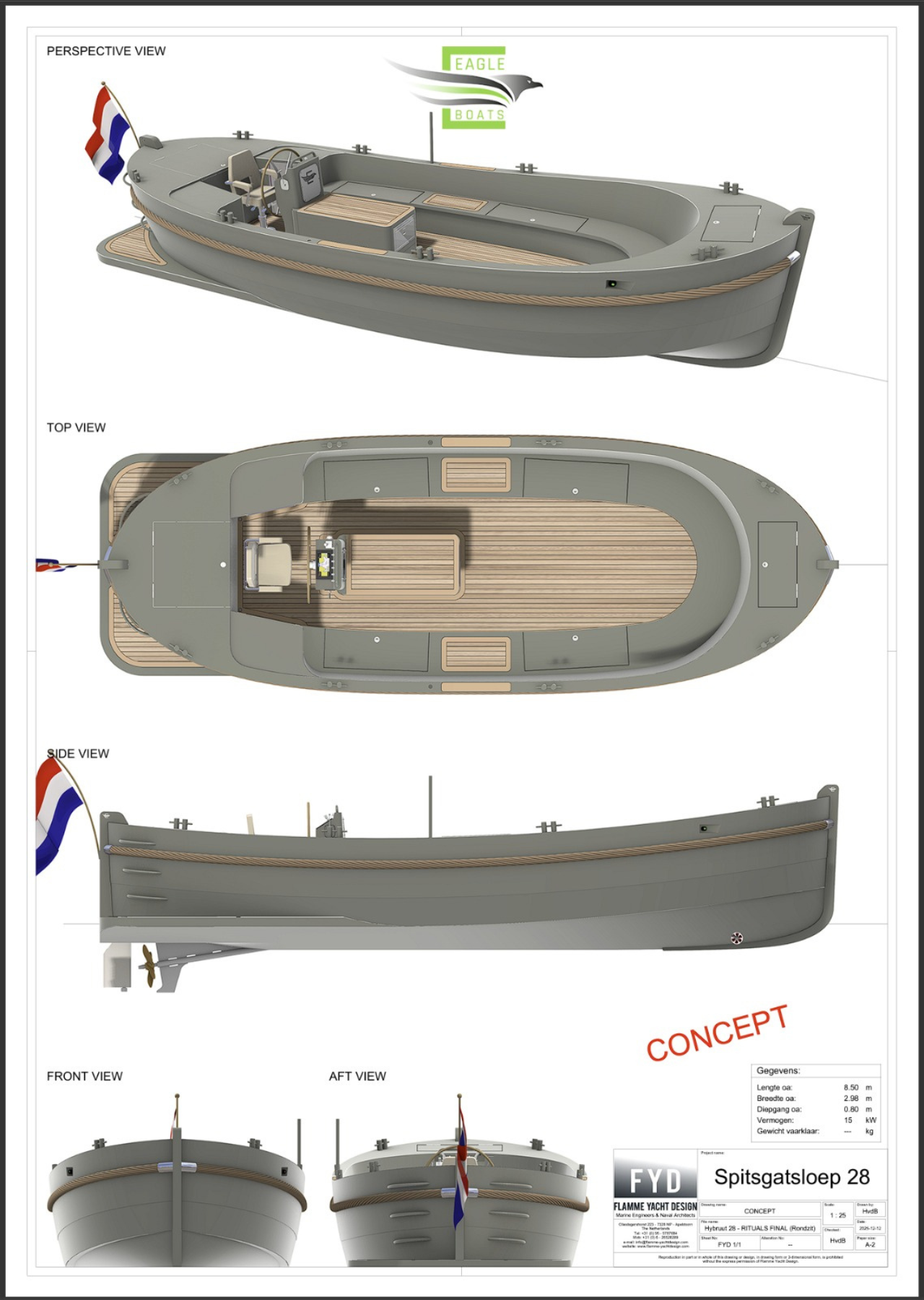
Eagle 28SG
Dimensions
- Length Overall (LOA)
- 8.5 m | 27.9 ft
- Beam Overall (BOA)
- 2.95 m | 9.7 ft
- Draft
- 0.8 m | 2.6 ft
- Clearance Height
- 1.35 m | 4.4 ft
- Weight (Ready)
- 2,200 kg | 4,850 lbs
Engines & propulsion
- Electric Drive
- 10-50 kW
- Hybrid Option
- Up to 250 pk
- Max Speed (Electric)
- 35 km/h
- Max Speed (Hybrid)
- 60 km/h
Capacity
- Passengers
- 20 persons
Build quality
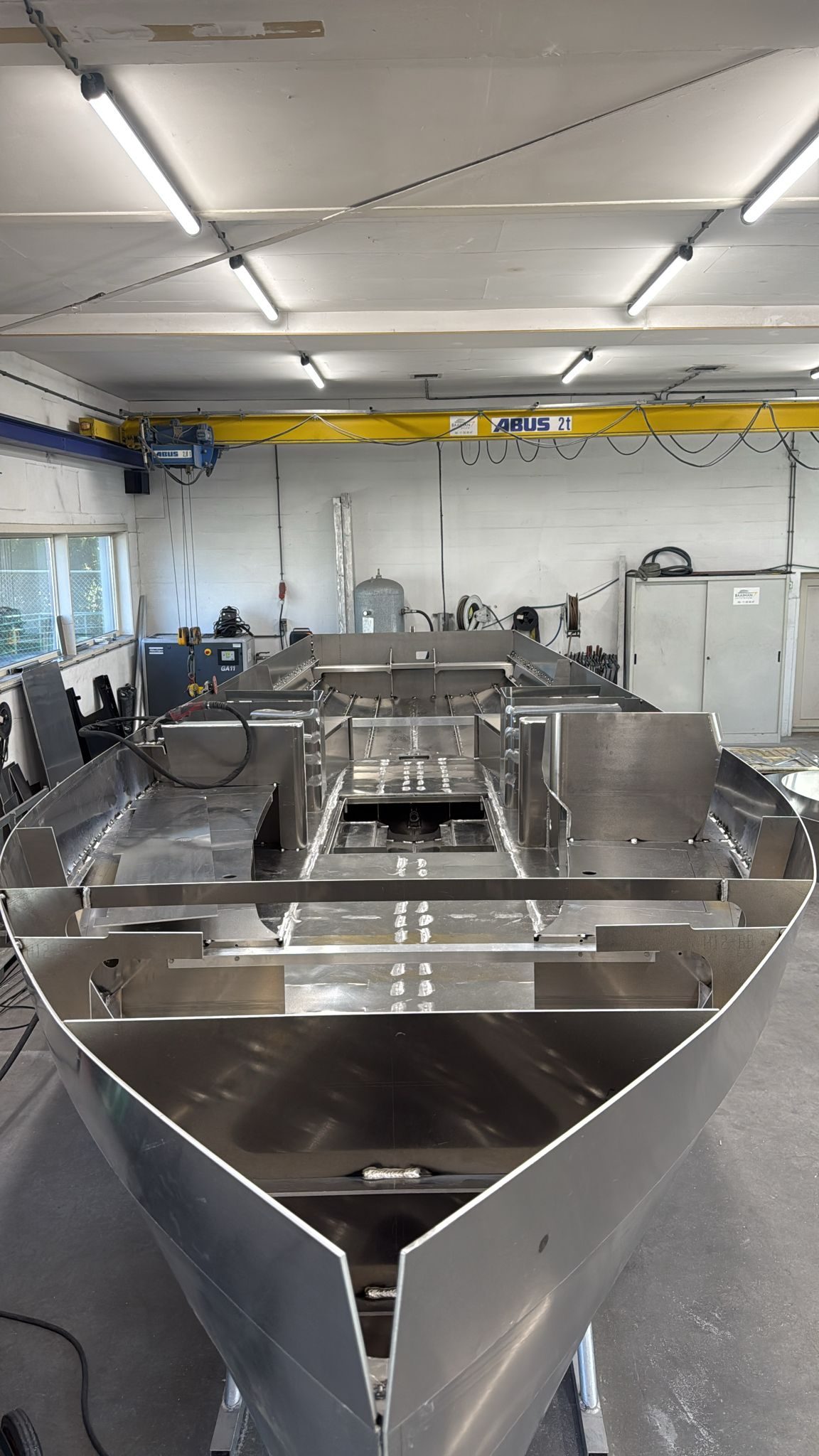
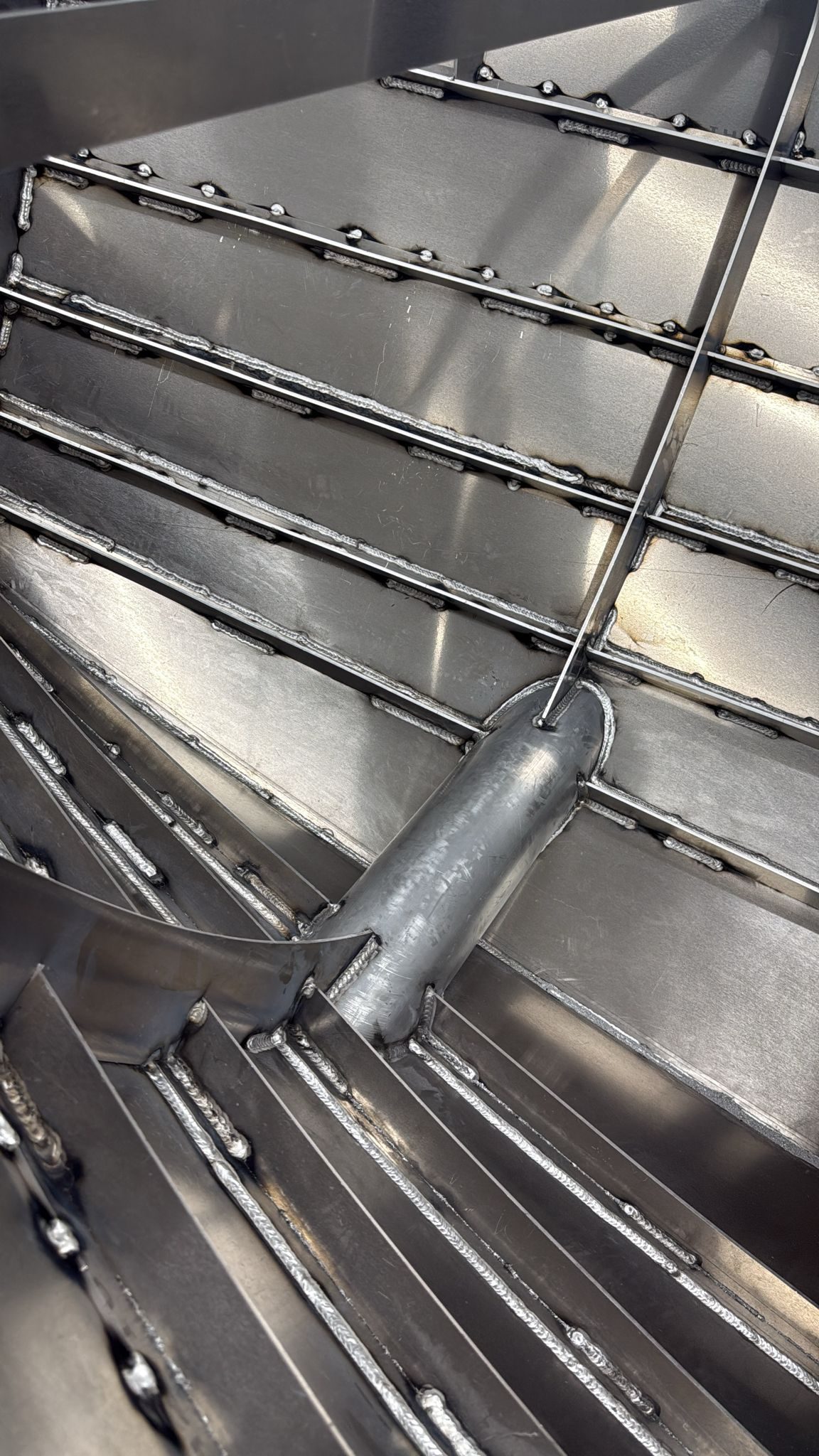
Professionally built, from systems to paintwork
In all our models we choose professional, integrated systems: propulsion, battery, charger and controls are designed as one whole and matched to each other, not assembled from loose parts. We work with renowned brands, such as propulsion from Bellmarine, Molabo and Combi Outboards, and batteries and electrics from MG Energy Systems and Victron Energy. We also look at what is readily available in your country, with good distribution and service.
We build many boats under survey. That is why we only use certified materials and components, with the documentation that goes with them.
The finish is matched to the use: from a rugged rental standard to superyacht-quality paintwork.
Read more about our build quality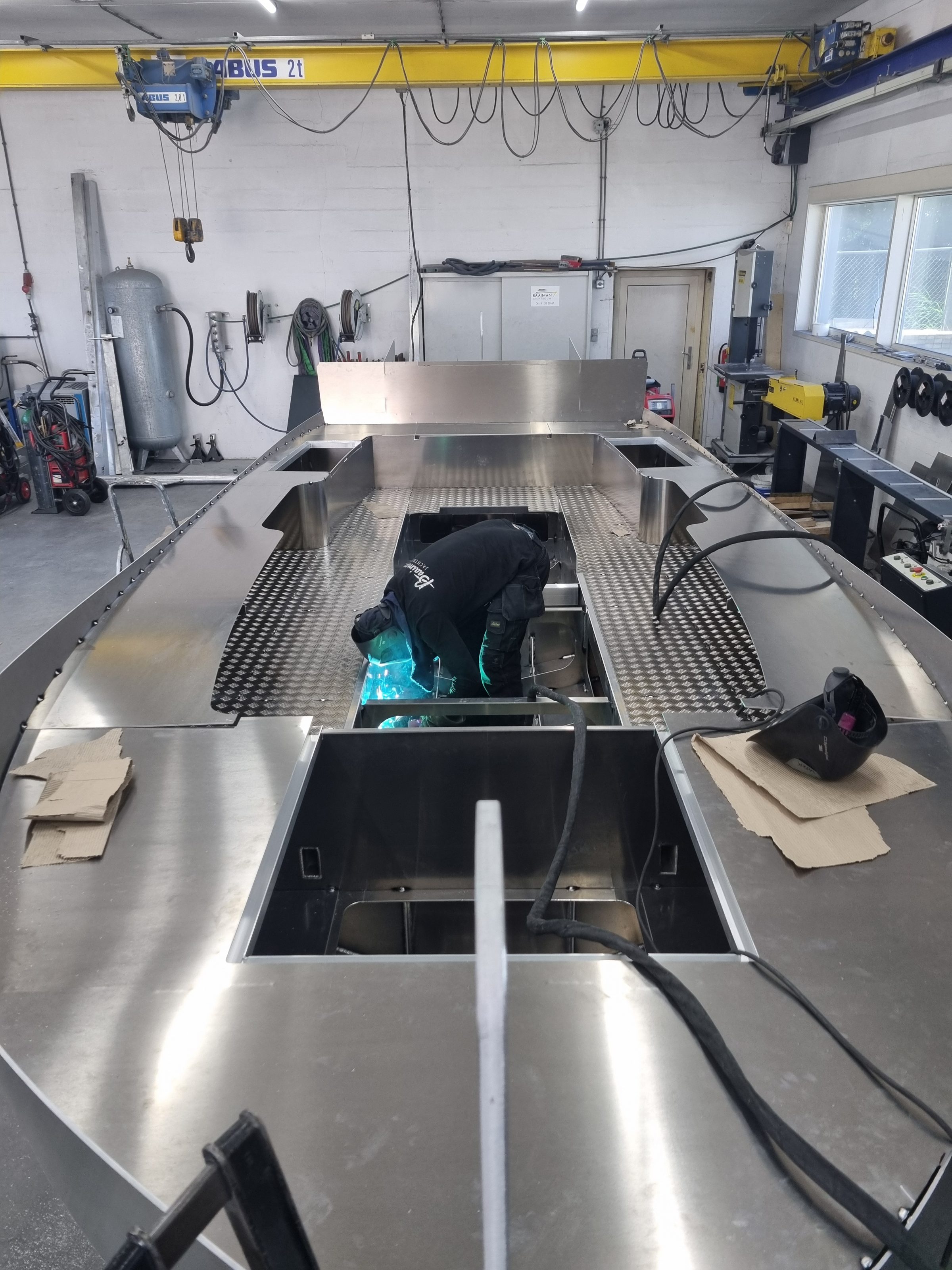
Our approach
Your operating day first, then the boat
For every enquiry we look at how you operate, where you sail and the range you need, and design a solution around that. Our baseline is at least 12 hours of sailing at economical speed; that speed depends on the length and hull shape of the boat.
01
Operating pattern
Hours per day, number of departures, speeds and the number of people on board.
02
Operating area
Bridge clearance, draught, width limits, current and the rules for your waters.
03
Energy and charging
The right battery, charging at the quay and, where needed, opportunity charging, a generator or solar panels.
04
Tailored boat
Layout, seating, canopy, heating and equipment, matched to how you use it.
Example from our voyage planner: 8 metre sightseeing boat, 25 passengers
- Schedule
- 4 departures, 8 hours sailing per day
- Speed
- 10 km/h
- Average power
- 4.1 kW
- Energy per day
- 34.4 kWh for 80 km
- Opportunity charging
- 3 × 30 minutes at 4.8 kW
- Battery required
- 39 kWh (47.7 kWh without opportunity charging)
- Battery chosen
- 45 kWh, lowest level 23%
Calculated with the DSYHS and Holtrop-Mennen resistance methods. Indicative: wind, current, load, driving style and battery ageing affect consumption. Opportunity charging saves 18% battery capacity here.
FAQ
Questions about electric ferry services
How many crossings per charge?+
We calculate it per timetable: distance, speed, passengers and time at the quay. Often a smaller battery with short charging stops between crossings is the best solution.
How does the wheelchair lift work?+
A hydraulic lift on board raises a wheelchair from quay level to deck level, so the passenger boards and leaves independently.
Which rules apply to passenger transport?+
That differs per country and per number of passengers. We build to the requirements of your waters and guide you through certification.
Is a water taxi possible?+
Yes. The 28SG is available electric or hybrid and suits a 20-person water taxi.
What finish and survey can I expect?+
We use professional, integrated systems and build many boats under survey, with certified materials and components. Paintwork is matched to the use: from a rugged rental standard to superyacht quality.
Which brands do you use for propulsion and batteries?+
Renowned brands, depending on the application: electric propulsion from Bellmarine, Molabo and Combi Outboards, among others, and lithium batteries, battery management and electrics from MG Energy Systems and Victron Energy. We prefer brands that are readily available in your country, with good distribution and service.
Who builds Eagle boats?+
Eagle Boats is the brand of Navisol B.V. in Elburg, the Netherlands. In about eight years we have built more than 200 electric boats of 4 to 14.5 metres. They operate in the Netherlands, the UK, Germany, Belgium, Finland, Denmark and Greece. We build electric and hybrid boats only. The Eagle 25TS is HISWA Electric Boat of the Year 2025.