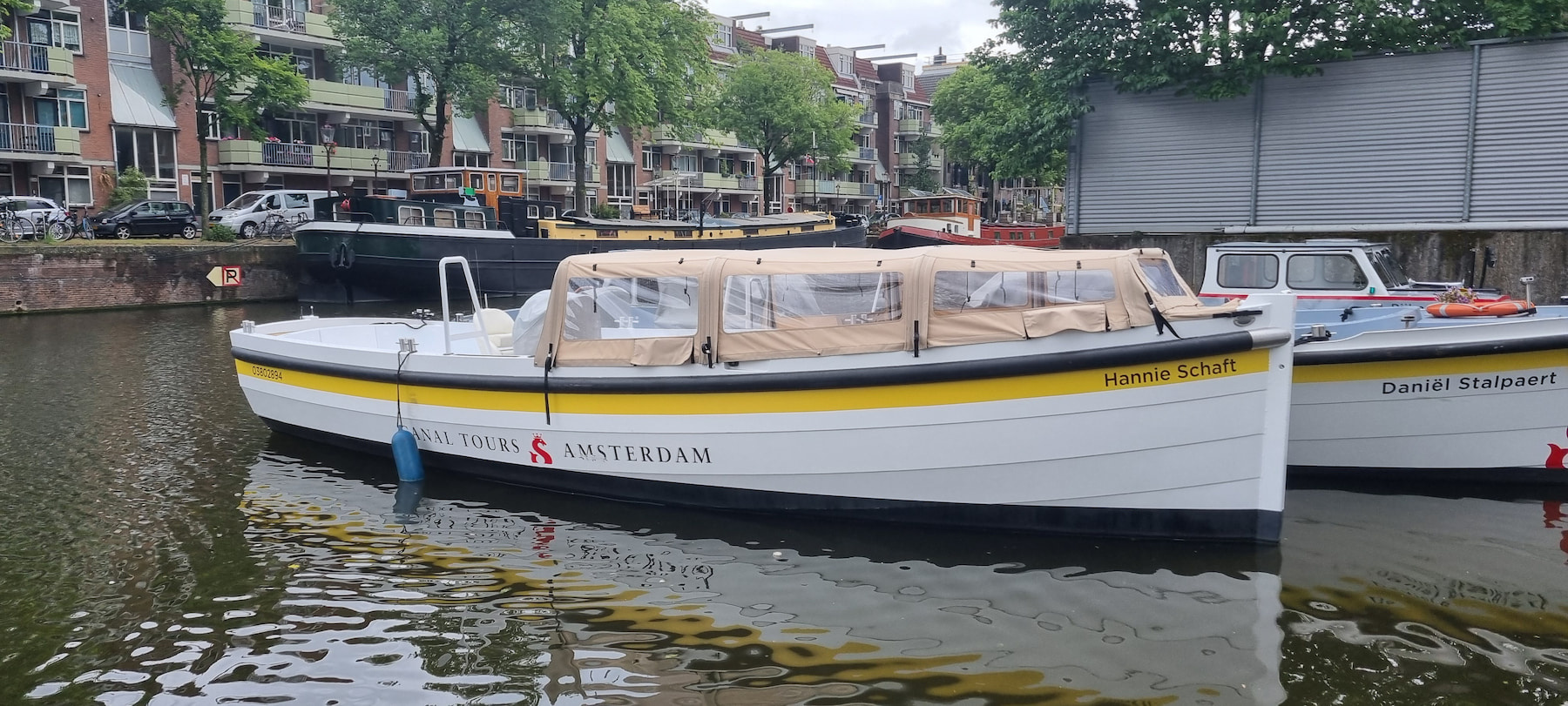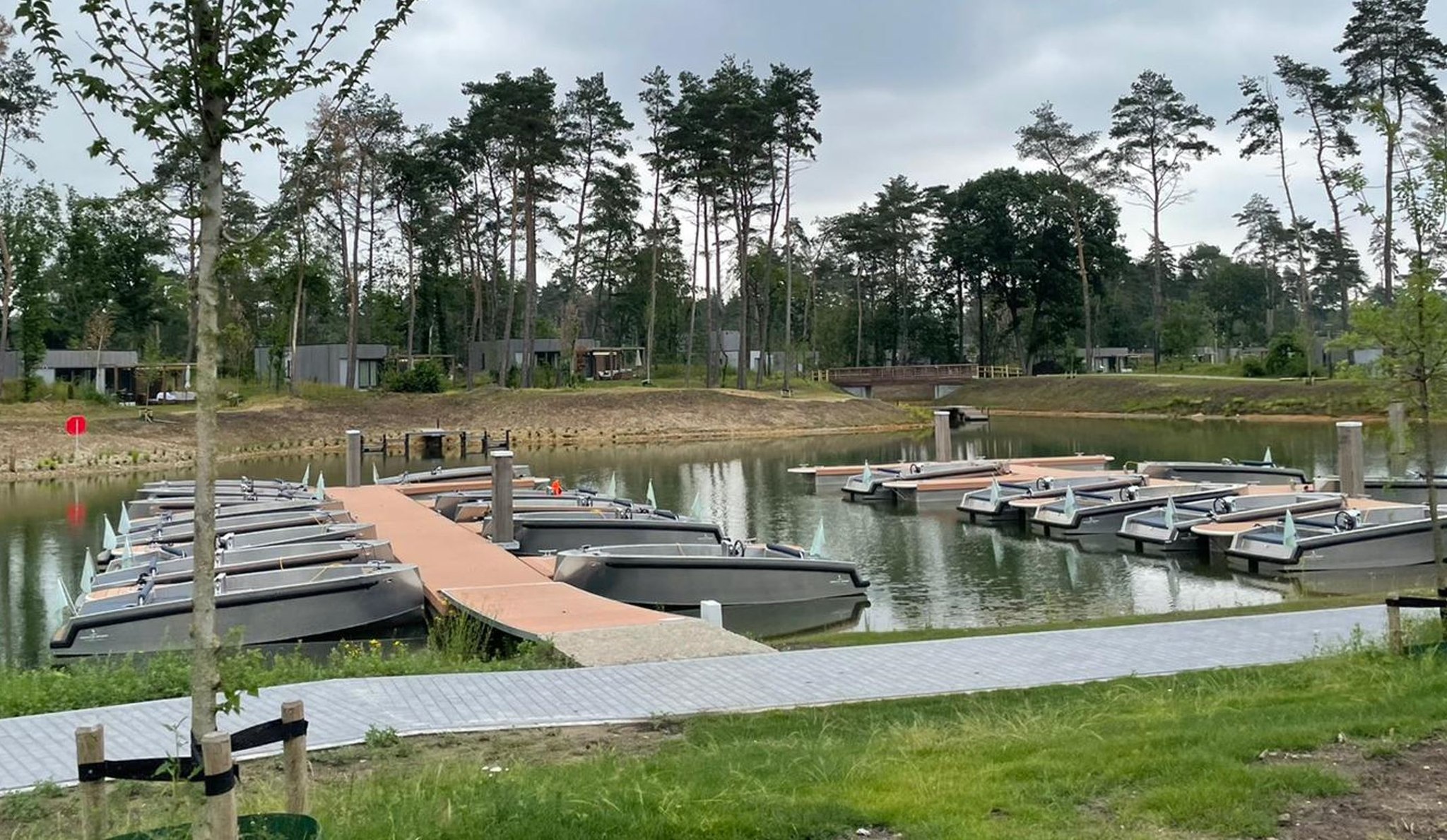
Most commercial electric boats charge overnight at the quay. Boats that sail a lot during the day can use a smaller battery with short charging stops between departures. A generator or solar panels help where shore power is not an option.
Charging at the quay
After the last departure the boat is plugged in and is fully charged the next morning. Charging time depends on the battery and the charging power. That power is limited by the shore connection, the charger on board and what the battery may accept.
An example: a 100 A charger on a 48 V battery delivers 4.8 kW. With a charging efficiency of 92 percent just over 4.4 kW goes into the battery. A 45 kWh battery is comfortably full overnight.
Opportunity charging
In sightseeing and ferry services the boat often waits at the quay between departures. That is a chance to top up. In our example for an 8 metre sightseeing boat three 30-minute stops deliver 6.3 kWh in total. As a result a 39 kWh battery is enough instead of 47.7 kWh: 18 percent smaller.
A smaller battery means less weight, lower cost and often more space on board. How fast a battery may charge differs per type; we take that into account as well.
Charging a fleet
- A connection for every boat on the jetty.
- A grid connection that can handle the total charging power, possibly with smart load sharing overnight.
- Clear agreements on who plugs in the boats at the end of the day.
Generator and solar panels
Where shore power is limited or absent, a generator ashore or on board can help, or you choose hybrid propulsion. Solar panels on a canopy provide extra energy for the loads on board and part of the sailing. They usually do not replace charging at the quay, but extend the operating day.
What we do
We always look at how you operate, where you sail and the range you need, and calculate how much energy you need per day. Then we advise on battery, charging stops and the connection you need.
Advice for your situation?
We look at how you operate, where you sail and the range you need, and calculate it for you.
See the solutions